






Institute of Paleobiology has received financial support for research and educational projects from:




Welcome to the website of the Institute of Paleobiology
General information
The Institute of Paleobiology (formerly the Institute of
Paleozoology) is one of the oldest units of the Polish Academy of
Sciences; established in December, 1952.
In all rankings by the State Committee for Scientific Research,
the Institute has been granted the highest category. Among its 44
staff members, 23 are researchers (among them five full
professors). The Institute is certified for awarding Ph.D. and
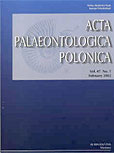
D.Sc. degrees in geology. The Institute is publisher of the
quarterly journal Acta Palaeontologica Polonica, with 2020 Impact
Factor = 2.062, ranked 16th among 54 international paleontological
journals listed by ISI.
Since its start, the Institute has conducted biologically-oriented
research on ancient life. Descriptions of fossil biota are
accompanied by comparative studies of their Recent counterparts.
The results of such studies are useful for both Earth and life
sciences. The scope of its research covers vertebrates,
invertebrates and microfossils of various origins. The Institute
is renowned throughout the world and participates extensively in
international cooperation. It has organized and participated in
scientific expeditions to various areas of the world (Mongolia,
Spitsbergen, Antarctica). Studies of paleofloras began in 1990,
and a year later a biogeological research programme started,
integrating life sciences with Earth sciences.
Mission
Understanding the fossil record as a foundation of knowledge
about the history and evolution of the living world and as a
source of intellectual inspiration.
Strategy
Maintaining the highest quality of research in pace with the
developments in global science and furthering the advancement of
academic staff in order to maintain its leading role in
paleobiological research. Applying European standards to HR
processes by implementing the principles and recommendations of
the European Charter for Researchers and the Code of Conduct for
the Recruitment of Researchers.
Implementation
The mission of the Institute is realized through
interdisciplinary research at the interface of biology, geology,
and related fields, sharing the results internationally in widely
accessible publications, and promoting both national and
international cooperation. In particular, we emphasize further
exploration of Poland and other areas to obtain research material,
developing paleontological collections, improving the quality of
laboratory facilities, and spreading the knowledge on the history
of life on Earth, which makes it necessary to continue our
participation in teaching at the university level.
INTRANET
[staff only]
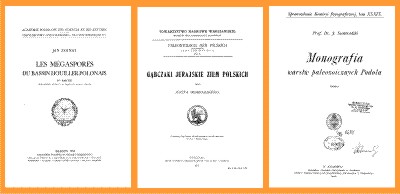
- ARCHIVE OF POLISH PALEONTOLOGY
PALEONTOLOGICAL COLLECTIONS
PUBLISHING
Acta Palaeontologica Polonica
 Palaeontologia Polonica
Wirtualna Biblioteka
Nauki [WBN]