





Institute of Paleobiology has received financial support for research and educational projects from:







History of the Institute
The Institute of Paleobiology has its roots in the
Zakład Paleozoologii, established as a research institution of
the Polish Academy of Sciences in 1952 for its member Roman
Kozłowski in recognition of his scientific achievements, and
then organized by him. Roman Kozłowski was then professor of
paleontology at the University of Warsaw and owed his
international reputation mostly to disclosing the affinities of
graptolites. His successor as the Institute’s
director, Zofia Kielan-Jaworowska, strengthened the
international reputation of her 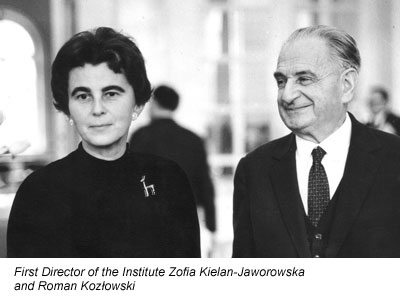 team
with a series of very successful expeditions to the Gobi Desert.
Now the Institute is known also as the publisher of the
international quarterly journal Acta Palaeontologica
Polonica.
team
with a series of very successful expeditions to the Gobi Desert.
Now the Institute is known also as the publisher of the
international quarterly journal Acta Palaeontologica
Polonica.
Institute of Paleobiology
The Institute was formally created on 18 December 1952 as a
branch (at that time Zakład Paleozoologii PAN) of the newly
organized Polish Academy of Sciences, which arose from the fusion
of formerly independent scientific societies and foundations.
However, it was 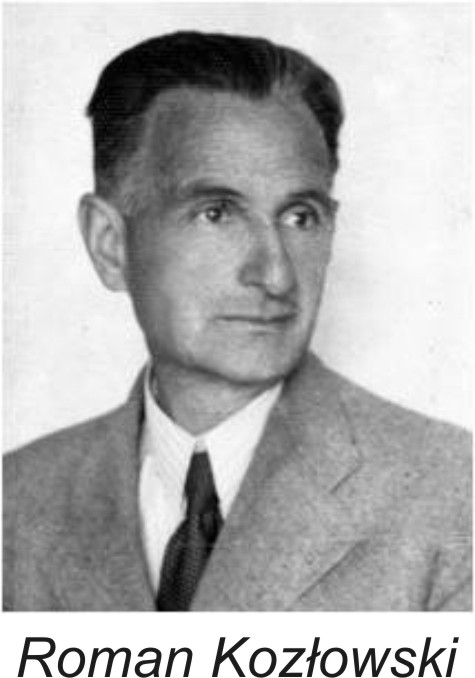 only after Roman
Kozłowski, then the professor of paleontology of Warsaw
University, accepted in 1954 the institute’s directorship that the
Institute emerged from the University’s chair of paleontology.
Since the very inception of the institute, its research has had
strong a biological tendency. The professional perfection and
intellectual openness of Kozłowski were of crucial importance in
developing the basic features of the Warsaw school of paleontology
during the first few years of the Institute. Scientific activities
at the paleontological institutions of the University and the
Academy were completely unified at that time and, except for
different sources of research funding for particular students,
there actually was a single school of paleontology in Warsaw, the
one led by Kozłowski. The Institute's affiliation to the Academy
allowed the assembly of a much larger team of paleontologists than
if university teaching were their main duty.
only after Roman
Kozłowski, then the professor of paleontology of Warsaw
University, accepted in 1954 the institute’s directorship that the
Institute emerged from the University’s chair of paleontology.
Since the very inception of the institute, its research has had
strong a biological tendency. The professional perfection and
intellectual openness of Kozłowski were of crucial importance in
developing the basic features of the Warsaw school of paleontology
during the first few years of the Institute. Scientific activities
at the paleontological institutions of the University and the
Academy were completely unified at that time and, except for
different sources of research funding for particular students,
there actually was a single school of paleontology in Warsaw, the
one led by Kozłowski. The Institute's affiliation to the Academy
allowed the assembly of a much larger team of paleontologists than
if university teaching were their main duty.
It is noteworthy that, despite strong political pressure, Polish
paleontology was never involved in ‘Lysenkoism’ and not a single
paleontological article condemning the alleged ‘idealism’ of
Western genetics or evolutionary theory has been published, partly
due to Kozlowski’s scientific and moral stature. When political
conditions improved after 1956, this fact facilitated
re-establishing ties with scientific institutions abroad.
Ironically, the only paper in Russian ever published in the
Institute journal, was designed as a message to Russian colleagues
in 1956 that the proper alternative to the naïve ‘evolutionism’
enforced by the Communist Party in the Soviet Union is the
Neo-Darwinian approach. As a part of newly emerging cooperation
with Russian paleontology, Aleksey Rozanov and Vladimir
Missarzhevsky visited Warsaw as the first young paleontologists
allowed to travel to Poland, to master their seminal ideas on the
Early Cambrian ‘small shelly fossils’ with help from Roman
Kozłowski.
Roman Kozłowski used his influential position in Polish science to
forward the proposal for Polish-Mogolian Paleontological
Expeditions to the Gobi Desert in the early 1960s. This enabled
the organization of a series of eight expeditions, all but one led
by Zofia Kielan-Jaworowska. After Roman
Kozłowski retired on 31 December 1960, she took 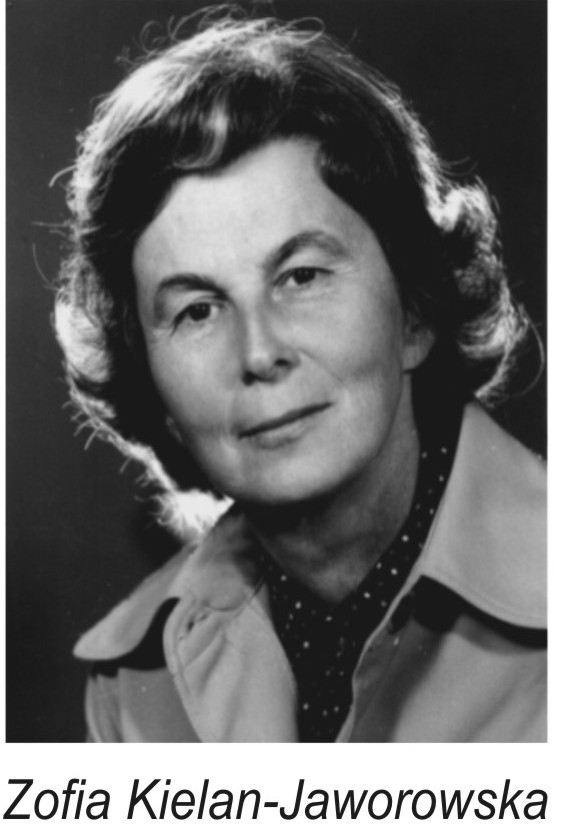 the position
of Director of the Institute and kept it for 22 years (1961–1982).
The expeditions to Mongolia opened a new perspective for the
Institute. A large collection of Late Cretaceous mammals,
reptiles, amphibians, birds, and other fossils was gathered. The
work on these materials conducted by the Institute’s employees, as
well as by colleagues from other paleontological centers in
the position
of Director of the Institute and kept it for 22 years (1961–1982).
The expeditions to Mongolia opened a new perspective for the
Institute. A large collection of Late Cretaceous mammals,
reptiles, amphibians, birds, and other fossils was gathered. The
work on these materials conducted by the Institute’s employees, as
well as by colleagues from other paleontological centers in 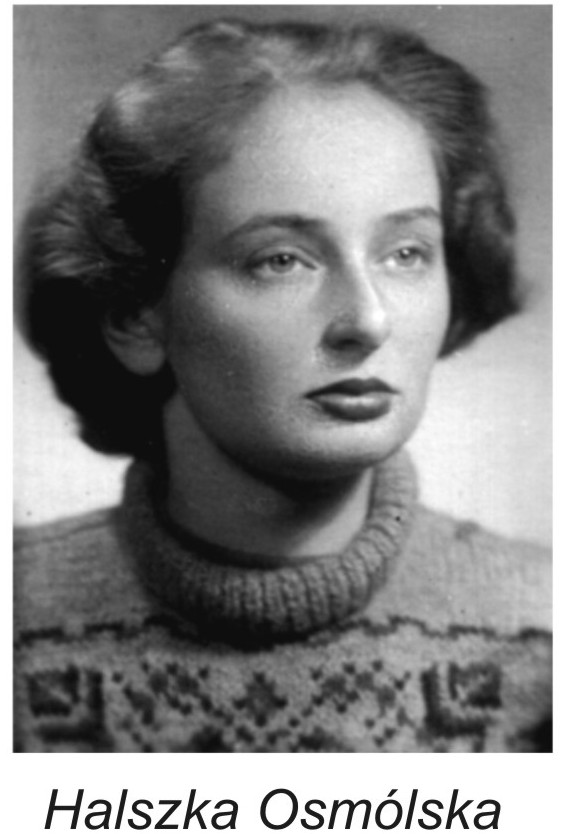 Poland
and abroad, led to the publication of ten volumes of Results
of the Polish-Mongolian Paleontological Expeditions in the
years 1969–1984, comprising all together 64 papers. Reports from
the expeditions and the most general results of research were also
published in high profile international journals, including papers
in Nature and a review in American Scientist.
Of special importance are the results of osteological studies on
primitive mammals, as well as dinosaurs. Halszka Osmólska, who specialized in
dinosaurs, headed the Institute for six years (1983-1988) after
Zofia Kielan-Jaworowska retired and moved to Oslo University.
Poland
and abroad, led to the publication of ten volumes of Results
of the Polish-Mongolian Paleontological Expeditions in the
years 1969–1984, comprising all together 64 papers. Reports from
the expeditions and the most general results of research were also
published in high profile international journals, including papers
in Nature and a review in American Scientist.
Of special importance are the results of osteological studies on
primitive mammals, as well as dinosaurs. Halszka Osmólska, who specialized in
dinosaurs, headed the Institute for six years (1983-1988) after
Zofia Kielan-Jaworowska retired and moved to Oslo University.
Vertebrates have been studied by members of the Institute since
1955, when Julian Kulczycki published his monograph on the mammoth
and started to work on the Early Devonian porolepidid fish,
offering crucial information for understanding the origin of
tetrapods. In fact, internationally recognized vertebrate
paleontology has its roots in Warsaw as deep as the times when
Tsarist Russia ruled eastern Poland. In 1896 the chair of geology
was established at the Imperatorial Warsaw University for Vladimir
Amalitsky. His famous expeditions to the locality Sokolki on the
Northern Dvina River resulted in the assembly at the University
(later displaced to the Warsaw Polytechnical Institute) a great
collection of Permian pareiasaurs and mammal-like reptiles.
Vladimir Amalitsky is infamous in Poland owing to his 1905
proposal to move the Warsaw University to a Russian city to
prevent teaching in the Polish language (after an uprising in
1863, only Russian was allowed in Polish schools). No wonder that
any suggestion to include him in the pedigree of the Institute was
for a long time strongly resisted. Vertebrate paleontology is
still the leading topic of research in the Institute, although now
the fossil material comes mostly from recently discovered sites in
southern Poland: the Early Triassic bone breccia from Czatkowice
and several Late Triassic localities, the most widely known being
Krasiejów. Numerous papers and monographs have already been
published on Triassic continental animals.
Roman Kozłowski had gained his international reputation mostly
owing to his work on graptolites. He proved they were relatives of
recent pterobranch hemichordates 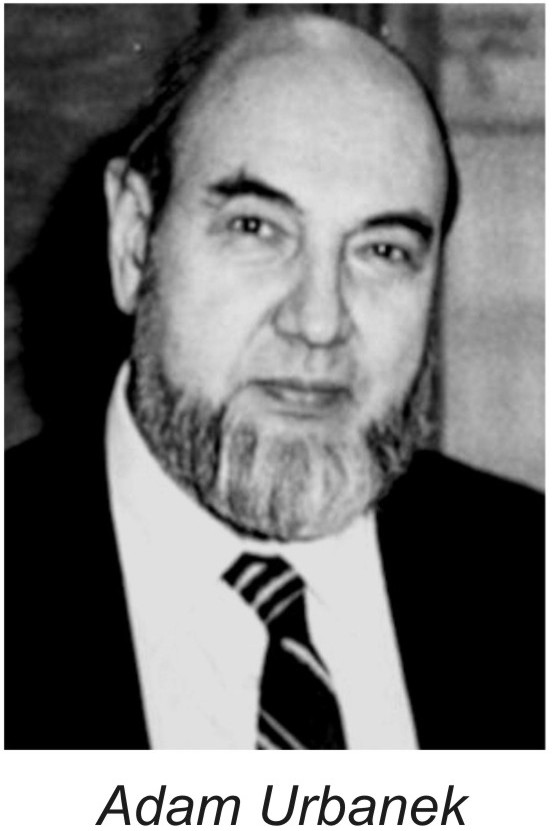 (not cnidarians, as
believed earlier). This line of biologically oriented research on
these colonial animals was continued by Kozłowski’s pupil Adam Urbanek, who published several
important papers on the evolution of Silurian graptolites,
hypothesizing on mechanisms of regulation of colony development in
clonal organisms. He succeeded Roman Kozłowski at the university
chair and, after joining the Institute, he was its Director in
1989–1991. There were some attempts to continue research on clonal
organisms with bryozoans as model organisms. Taxonomy and
graptolite-based biostratigraphy is still studied at the
Institute.
(not cnidarians, as
believed earlier). This line of biologically oriented research on
these colonial animals was continued by Kozłowski’s pupil Adam Urbanek, who published several
important papers on the evolution of Silurian graptolites,
hypothesizing on mechanisms of regulation of colony development in
clonal organisms. He succeeded Roman Kozłowski at the university
chair and, after joining the Institute, he was its Director in
1989–1991. There were some attempts to continue research on clonal
organisms with bryozoans as model organisms. Taxonomy and
graptolite-based biostratigraphy is still studied at the
Institute.
Since some employees of the Institute were more and more deeply
involved in research in Spitsbergen and Antarctica, a formal polar
research project has been established. Paleontological expeditions
were undertaken to the Hornsund region of Spitsbergen in 1974,
1975, 1976, and 1979, as 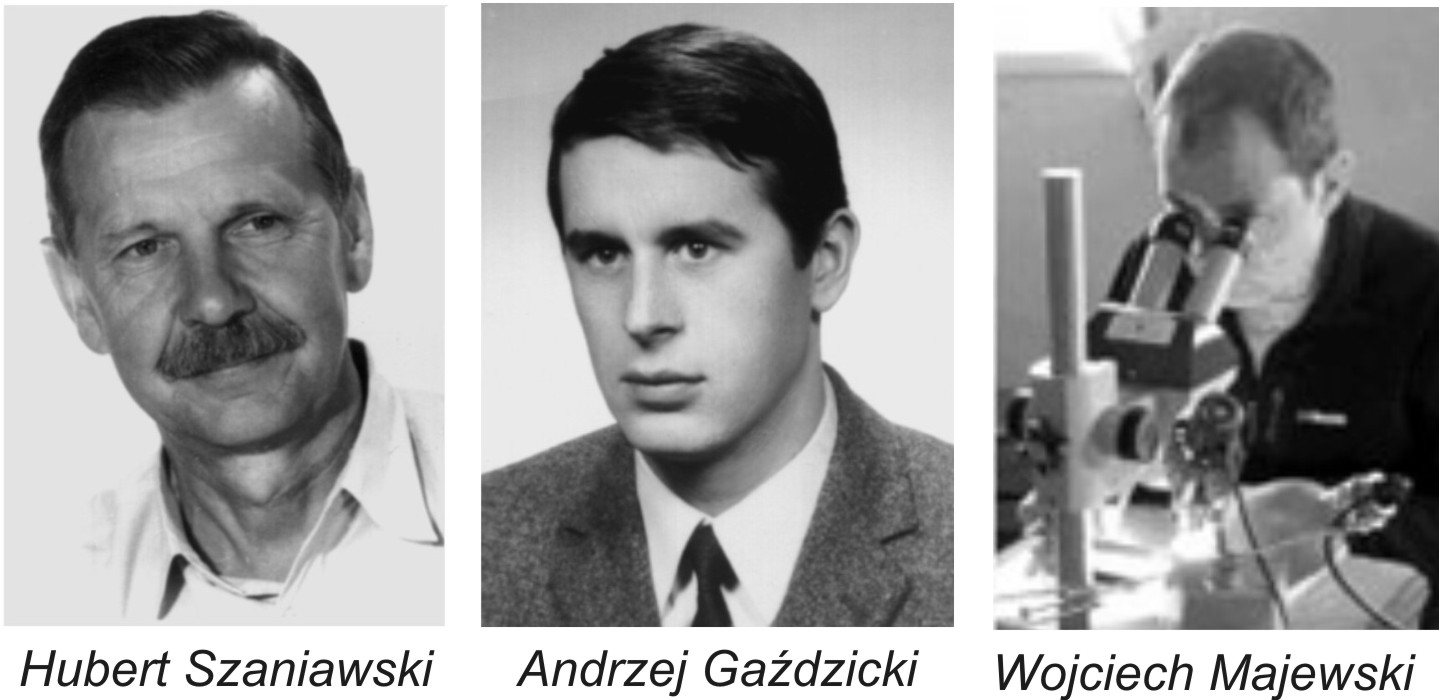 well as to the
South Shetland Islands area in 1978, 1980, 1985, 1987, 1990, and
1991. In both cases, permanent stations maintained there by the
Polish Academy of Sciences were used. Hubert Szaniawski, Director of the Institute
in 1992-2006 and Andrzej Gaździcki had leading positions in
this activity. Now Wojciech Majewski continues paleontological
research in the Antarctic.
well as to the
South Shetland Islands area in 1978, 1980, 1985, 1987, 1990, and
1991. In both cases, permanent stations maintained there by the
Polish Academy of Sciences were used. Hubert Szaniawski, Director of the Institute
in 1992-2006 and Andrzej Gaździcki had leading positions in
this activity. Now Wojciech Majewski continues paleontological
research in the Antarctic.
Roman Kozłowski developed a basis of paleontological studies in
Poland, which was aimed at description, according to the highest
standards of paleontological taxonomy, of the main fossil groups
found in the country. This project has resulted in publication of
several large monographs and many papers of internationally
acknowledged 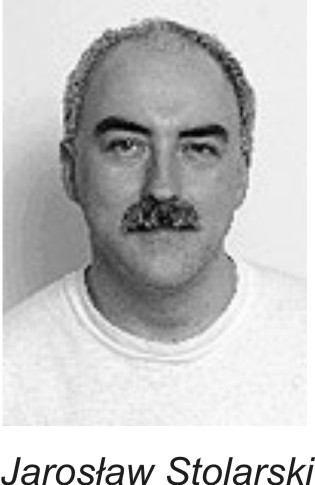 value. Among works addressing most
general biological problems were those of 1963 on sexual
dimorphism in ammonites by Henryk Makowski (employed for half time at
the Institute). Some workers gradually departed from the
descriptive taxonomic approach. Microstructural and geochemical
studies were the first steps in this direction for Cyprian
Kulicki, who developed SEM techniques of microstructural
research on
value. Among works addressing most
general biological problems were those of 1963 on sexual
dimorphism in ammonites by Henryk Makowski (employed for half time at
the Institute). Some workers gradually departed from the
descriptive taxonomic approach. Microstructural and geochemical
studies were the first steps in this direction for Cyprian
Kulicki, who developed SEM techniques of microstructural
research on 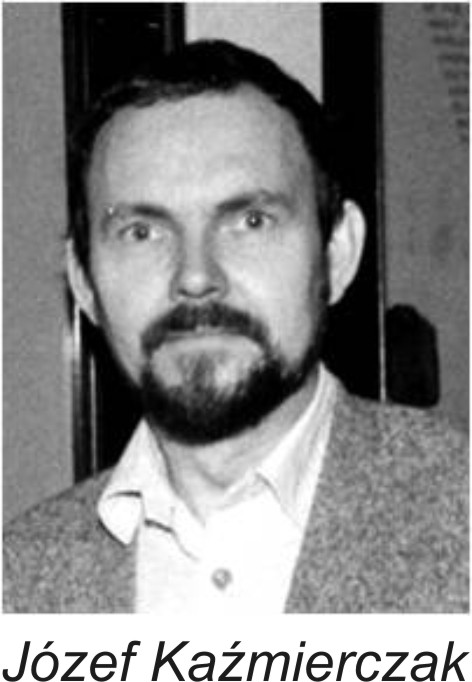 exquisitely preserved ammonites
from the famous locality Łuków. Recently the microstructural
studies conducted by Jarosław Stolarski, also with the atomic
force microscope, gave well-published (Science) results.
Józef Kaźmierczak published several widely
discussed hypotheses on various aspects of carbonate
biomineralization, including the Soda Ocean Hypothesis forwarded
together with his German collaborators, in high profile journals (Science,
Nature). He was the main promoter of the move to change the
name of Zakład Paleozoologii to Zakład Paleobiologii in 1977.
exquisitely preserved ammonites
from the famous locality Łuków. Recently the microstructural
studies conducted by Jarosław Stolarski, also with the atomic
force microscope, gave well-published (Science) results.
Józef Kaźmierczak published several widely
discussed hypotheses on various aspects of carbonate
biomineralization, including the Soda Ocean Hypothesis forwarded
together with his German collaborators, in high profile journals (Science,
Nature). He was the main promoter of the move to change the
name of Zakład Paleozoologii to Zakład Paleobiologii in 1977.
Theorizing in the Institute received its greatest impetus from
the activity 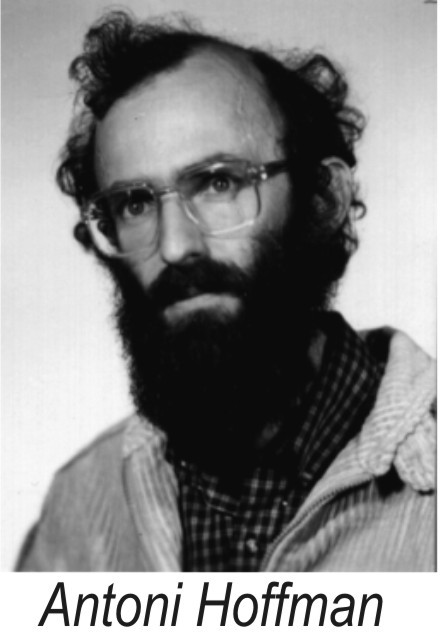 Antoni Hoffman (1950–1992). His seminal
paper in Paleobiology on the lack of integration within
ecosystems had a profound influence on the development of modern
paleoecology. In 1986 he returned to Poland, from his six-years
political emigration to Germany and the United States, to be
employed at the Institute by Halszka Osmólska (who risked her job
in acting against the Communist Party recommendation).
Antoni Hoffman (1950–1992). His seminal
paper in Paleobiology on the lack of integration within
ecosystems had a profound influence on the development of modern
paleoecology. In 1986 he returned to Poland, from his six-years
political emigration to Germany and the United States, to be
employed at the Institute by Halszka Osmólska (who risked her job
in acting against the Communist Party recommendation).
The number of employees of the Institute increased from three in
1952 to about fifty in the 1970s and retains this number to the
present. Most members received their doctoral degrees while
working at the institute. They usually graduated from Warsaw
University. The age structure of the Institute’s staff was
initially rather uniform, and gaps between age guilds results in
some organizational problems, but it has become reasonably
balanced now. The Scientific Council of the Institute has been
entitled since 1977 to grant PhD degrees. Since 1990 its official
name is Instytut Paleobiologii and since 1991 the Council can
grant also habilitations (Doctor of Sciences) in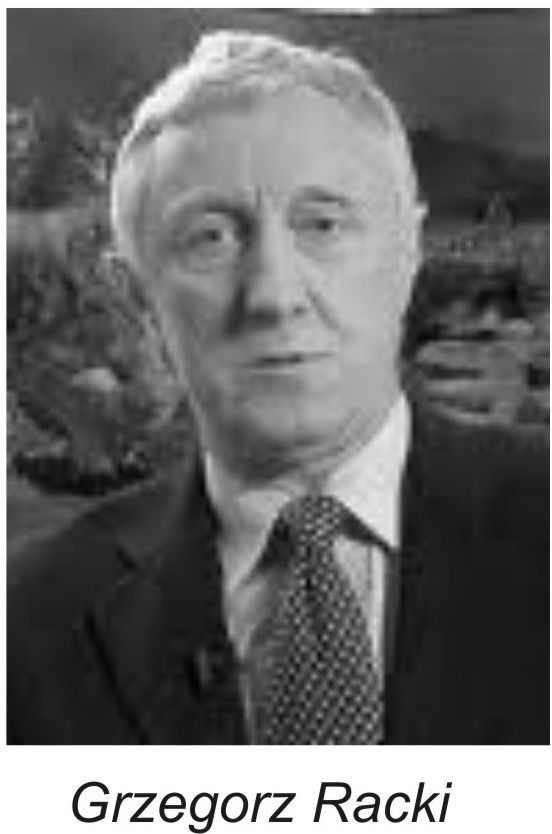 paleontology.
Paleontology in Warsaw has always had a strong biological
inclination (ironically, both that by Amalitsky and Kozłowski) but
ties with geology were also close. These connections, especially
regarding geochemistry, were strengthened even more by Grzegorz
Racki, Director of the Institute in years 2006-2010.
There are 21 scientists and 12 Ph.D. students at the Institute and
the technical and administrative staff of 22. There is complete
freedom in choice of research topics in the Institute; opinions
are sometimes expressed that this freedom goes a bit too far. The
Institute easily adapted in the 1990s to the system of financing
by government research grants, initially distributed by the
Committee of Scientific Research (KBN) and now by the Ministry of
Science and Higher Education. The Institute of Paleobiology is
rated among the leading scientific institutes in Poland. This is a
result of the relatively high quality and numerous publications by
the members of the Institute.
See also Acta Palaeontologica
Polonica article:
40 years of the Institute of Paleobiology of the
Polish Academy of Sciences
Library
During World War II the collections of paleontological literature at Warsaw University and in the Geological Survey were destroyed. A collection of basic publications therefore had to be assembled from scratch. Initially, it was the private library of Roman Kozłowski that served as the major source of scientific literature for paleontologists in Warsaw. He subsequently transferred his books and journals to the Institute, and the core of the Library was established in this way. The book collection grew steadily, owing mainly to gifts from our colleagues from abroad. We owe much to the generosity of our friends from Western scientific institutions. After political tensions relaxed in the mid-1950s and international contacts were rebuilt, a new policy could be implemented. An exchange program of publications was established in 1962, and the Institute has received consequently paleontological serials and periodicals. When stock was taken in 1986, the library held 10 854 volumes of books and separate reprints and 27 006 volumes of periodicals. Another turn of fortune is marked by the year 1989 and following political and economical changes in Poland. The Institute received financial independence and owing to governmental grants it is now possible to keep library acquisitions at a reasonable level. The library of the Institute houses currently the largest collection of paleontological books and periodicals in Poland.
Of course, we depend more and more on electronic versions of
scientific literature and a project of making available all the
Polish paleontological works in the Internet was already
established [Archive of Polish Paleontology]. However,
because of the long life of paleontological papers, we are
concerned very much about keeping hard copies of at least
descriptive taxonomic works.
Publications
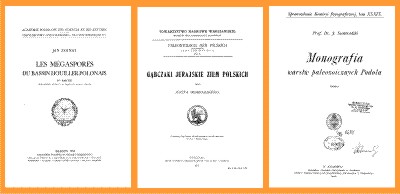
The first attempt to establish a paleontological serial devoted
to ‘paleontography’ of Polish fossils dates back to 1845 when
Ludwik Zejszner (spelled Zeuschner in his papers published in
German journals), known mostly for his descriptions of ammonites
and other fossils from the type Tithonian in the Polish
Carpathian, started to publish the Paleontologia Polska
with lithographic plates. The condition of science in the part of
Poland ruled at that time by Russia was deteriorating, however,
and he was not able to continue publication, which stopped after
three issues. The next attempt was made in 1913 by Jan Lewiński,
whose greatest achievement in paleontology was a monograph
(published in France) of fossils coeval to the Tithonian but from
central Poland. His Paleontologia Ziem Polskich did not
survive World War I and only two volumes were published. The Palaeontologia Polonica established
by Roman Kozłowski in 1929 is, in a sense, 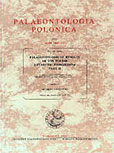 a continuation of the latter serial.
Owing to Kozłowski’s reputation for professional excellence,
concerning also editing and illustrating paleontological articles
(his Bolivian monograph in Annales de Paléontologie was
remarkable in this respect), he was able to found a serial
publication competitive with the leading German and Anglo-Saxon
periodicals. Fortunately, Kozłowski unlike many other Polish
academics survived World War II and was able to continue his work.
Sixty volumes have been published up to 2011, among them
Kozłowski’s classic monographs of the Early Devonian brachiopods
from Podolia and the Tremadoc graptolites extracted from
chalcedonites by means of hydrofluoric acid, and also Henryk
Makowski’s monographic presentation of the problem of sexual
dimorphism in ammonites. The supply of large monographs has
decreased in recent times because of the ways in which scientific
research is evaluated by funding agencies, and successive volumes
of Palaeontologia Polonica are not published every
year.
a continuation of the latter serial.
Owing to Kozłowski’s reputation for professional excellence,
concerning also editing and illustrating paleontological articles
(his Bolivian monograph in Annales de Paléontologie was
remarkable in this respect), he was able to found a serial
publication competitive with the leading German and Anglo-Saxon
periodicals. Fortunately, Kozłowski unlike many other Polish
academics survived World War II and was able to continue his work.
Sixty volumes have been published up to 2011, among them
Kozłowski’s classic monographs of the Early Devonian brachiopods
from Podolia and the Tremadoc graptolites extracted from
chalcedonites by means of hydrofluoric acid, and also Henryk
Makowski’s monographic presentation of the problem of sexual
dimorphism in ammonites. The supply of large monographs has
decreased in recent times because of the ways in which scientific
research is evaluated by funding agencies, and successive volumes
of Palaeontologia Polonica are not published every
year.
The quarterly Acta
Palaeontologica Polonica emerged in 1956 from the Acta
Geologica Polonica, which first appeared in 1950 and used
to contain many papers 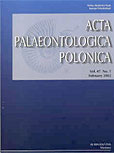 authored
by employees of the Institute. Because the geological journal was
not able to afford the increasing number of paleontological
articles, Roman Kozłowski, a member of the Editorial Board of the
Acta Geologica Polonica, decided to establish a sister
journal devoted exclusively to paleontological topics. Initially,
papers in Polish and French (one in Russian) had been accepted
along with those in English, but since more than twenty years
English has been practically the exclusive language of the Acta
Palaeontologica Polonica, though brief Polish summaries
were for long time added to every paper. The main scope of the
journal was descriptive paleontology, though occasionally papers
concerning evolutionary problems have also been published.
authored
by employees of the Institute. Because the geological journal was
not able to afford the increasing number of paleontological
articles, Roman Kozłowski, a member of the Editorial Board of the
Acta Geologica Polonica, decided to establish a sister
journal devoted exclusively to paleontological topics. Initially,
papers in Polish and French (one in Russian) had been accepted
along with those in English, but since more than twenty years
English has been practically the exclusive language of the Acta
Palaeontologica Polonica, though brief Polish summaries
were for long time added to every paper. The main scope of the
journal was descriptive paleontology, though occasionally papers
concerning evolutionary problems have also been published.
In the early Acta Palaeontologica Polonica, of special
interest is a series of papers on physiological explanations of
peculiarities in the evolution of astogeny, which were published
by Adam Urbanek in the 1960’s. The results of international
symposia on graptolites (1978), corals (1980), and terrestrial
ecosystems (1983) held at the Institute did also appear in this
journal. It was the ambition of the editors to maintain high
international standards in both scientific merit and editing.
Unfortunately, deterioration of the Polish economy and political
isolation of the state resulted in a decrease in submissions to
the journal.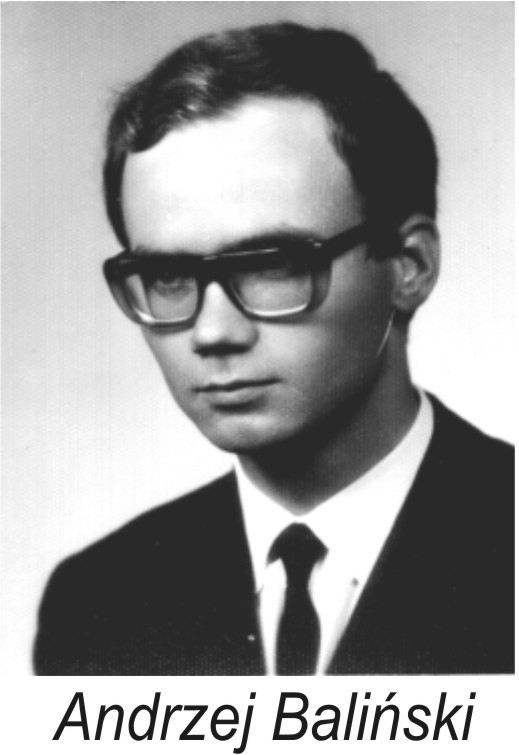
Owing to the release of governmental control on publications, in
1991 the Institute’s own Publishing Department was established
(with Andrzej Baliński as its head) which has
allowed us to introduce also high quality printing techniques. The
new editors, Jerzy Dzik
[Director of the Institute since 2011] 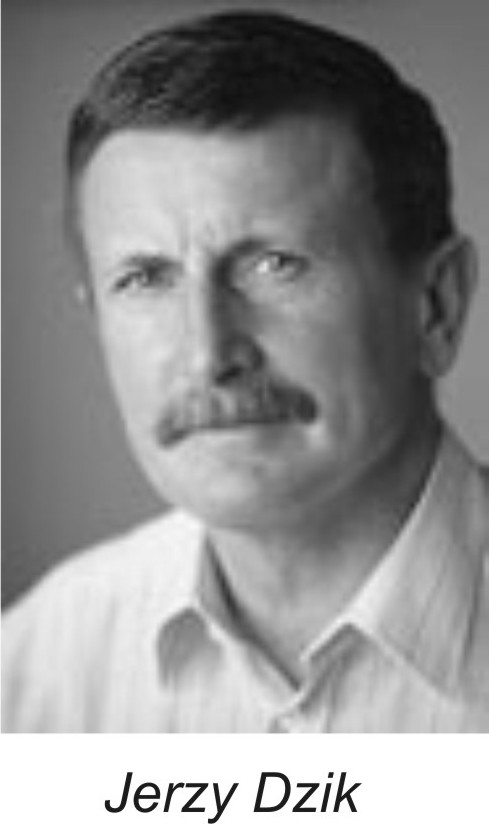 in Warsaw and co-opted by
him Matthew Nitecki in Chicago, attempted to re-establish the
reputation of Acta Palaeontologica Polonica as an
international journal. This was completed in 1996, with indexing
the journal by the Institute of Scientific Information (ISI) in
Philadelphia. After achieving his goal, Jerzy Dzik transferred
editorship to Zofia Kielan-Jaworowska, who meanwhile returned from
Oslo to Warsaw. She, together with Richard Cifelli and Jarosław
Stolarski further strengthened the journal so that in its Impact
Factor it is now 11th among 48 paleontological journals
listed by ISI. In 2011 Michael Benton joined Jarosław Stolarski as
the Editor.
in Warsaw and co-opted by
him Matthew Nitecki in Chicago, attempted to re-establish the
reputation of Acta Palaeontologica Polonica as an
international journal. This was completed in 1996, with indexing
the journal by the Institute of Scientific Information (ISI) in
Philadelphia. After achieving his goal, Jerzy Dzik transferred
editorship to Zofia Kielan-Jaworowska, who meanwhile returned from
Oslo to Warsaw. She, together with Richard Cifelli and Jarosław
Stolarski further strengthened the journal so that in its Impact
Factor it is now 11th among 48 paleontological journals
listed by ISI. In 2011 Michael Benton joined Jarosław Stolarski as
the Editor.
Museum of Evolution
In 1915 the renowned collection of Vladimir Amalitsky was evacuated from Warsaw to Russia and eventually provided the basis for establishing the Paleontological Institute in Moscow. Invertebrate fossils under the care of Dymitr Sobolew (for a long time the assistant of Amalitsky) have since that time been in Kharkov (now Ukraine). Fossil collections in Warsaw between the World Wars were gathered at the University and by the geological survey. Almost all of these collections were destroyed in 1939 (Kozłowski’s chair of paleontology) and 1944 (the State Geological Institute). After the war, geologically oriented collections and exhibitions of fossils were re-established by the State Geological Institute and the newly organized Museum of the Earth (included in the Polish Academy of Sciences). But the paleontological museum activity received its main impetus with the Polish-Mongolian Paleontological Expeditions to the Gobi Desert.
In 1968, an exhibition of dinosaurs from the Gobi Desert was
prepared by Zofia Kielan-Jaworowska in the Palace of Culture and
Science in the center of Warsaw. It 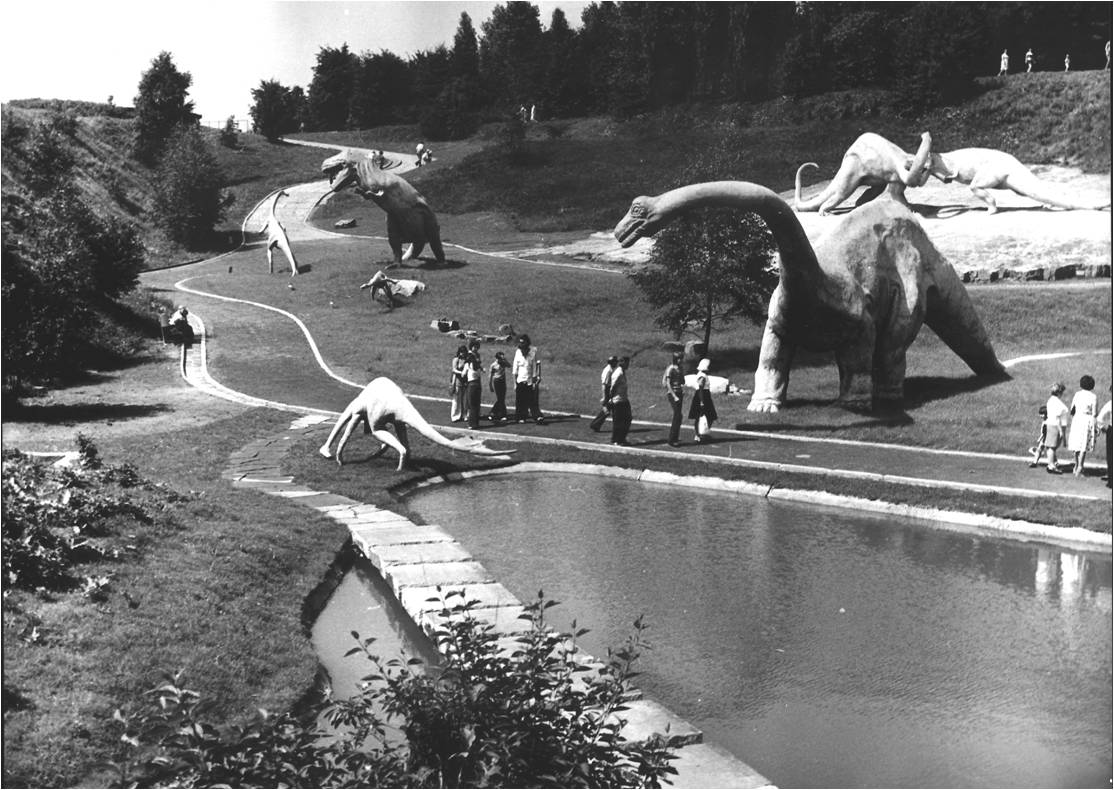 existed until 1984,
when the room used by paleontologists was requested for purposes
of political celebrations. Meanwhile, the first ‘dinopark’ in
Poland was opened in 1975 in Chorzów, designed by employees of the
Institute. Fortunately for us, in 1976 the Institute of Zoology
PAS dropped its museum in the Palace, and it was initially
transferred to the Botanical Garden organized by the Academy in
Powsin near Warsaw, and then to the Institute of Paleobiology.
existed until 1984,
when the room used by paleontologists was requested for purposes
of political celebrations. Meanwhile, the first ‘dinopark’ in
Poland was opened in 1975 in Chorzów, designed by employees of the
Institute. Fortunately for us, in 1976 the Institute of Zoology
PAS dropped its museum in the Palace, and it was initially
transferred to the Botanical Garden organized by the Academy in
Powsin near Warsaw, and then to the Institute of Paleobiology.
As a result, since 1985 a paleontological museum has been
maintained by the Institute in the Palace of Science and Culture
in the center of Warsaw. The present exhibition showing the evolution on land was
prepared by Zofia Kielan-Jaworowska prior to her departure for the
University of Oslo and rearranged by Jerzy Dzik in 2003. Mounted
skeletons of the late Cretaceous dinosaurs, found by our
expeditions in the Gobi Desert and life-size restorations of the
Late Triassic reptiles and amphibians from Krasiejów in their
environment are the most impressive of the exhibits. The Museum,
permanently remodeled, is a  place for scientific and teaching
activity. The institute has helped in the organization of several
paleontological museums by local self-governments of various rank
(villages of Lisowice and Krasiejów; borough of Ozimek that
established another museum at Krasiejów; county of Starachowice)
as well as ‘dinoparks’ by private companies. Currently, the
Institute promotes re-establishing the National Museum of Natural
History in Poland.
place for scientific and teaching
activity. The institute has helped in the organization of several
paleontological museums by local self-governments of various rank
(villages of Lisowice and Krasiejów; borough of Ozimek that
established another museum at Krasiejów; county of Starachowice)
as well as ‘dinoparks’ by private companies. Currently, the
Institute promotes re-establishing the National Museum of Natural
History in Poland.
People
During almost 60 years there were almost 100 people employed at
the Institute. To their knowledge, professional skills, and
enthusiasm we owe the present state of Polish paleontology and the
Institute itself. Some of them dedicated their whole professional
life to the Institute, some were with us briefly but their
services to international science generated an influence that will
last.
Gertruda Biernat (1923 - 2016)
Janusz Błaszyk (1926 - 2018)
Irena Brodniewicz
Kinga Dobrowolska
Andrzej Elżanowski
Jerzy Fedorowski
Jacek Grabowski
Michal Gruszczyński (1952 - 2011)
Antoni Hoffman (1950 - 1992)
Mariusz Jędrysek
Jadwiga Karczewska (1931 - 2016)
Zofia Kielan-Jaworowska (1925 - 2015)
Maria Kiepura
Roman Kozłowski (1889 - 1977)
Michał Kowalewski
Wiesława Kubiatowicz
Julian Kulczycki
Cyprian Kulicki
Krzysztof Małkowski
Henryk Makowski (1910 - 1997)
Grażyna Mierzejwska
Piotr Mierzejewski
Katarzyna Nguyon
Aleksander Nowiński
Halszka Osmólska (1930 - 2008)
Krystyna Pożaryska (1914 - 1989)
Halina Pugaczewska (1921 - 1997)
Grzegorz Racki
Maria Różkowska (1899 - 1979)
Karol Sabath (1963 - 2007)
Anna Stasińska (1920 - 1982)
Andrzej Sulimski (1926 - 1997)
Wojciech Szeligiewicz
Wanda Szymańska
Lech Teller (1928 - 2013)
Janusz Uchmański
Adam Urbanek (1928 - 2014)
Mieczysław Wolsan
Zdzisława Wolska
Current scientific staff:
Department of Environmental Paleobiology
Department of Evolutionary Paleobiology
INTRANET
[staff only]
PALEONTOLOGICAL COLLECTIONS
PUBLISHING
Acta Palaeontologica Polonica
 Palaeontologia Polonica